

About Lost Record Stores
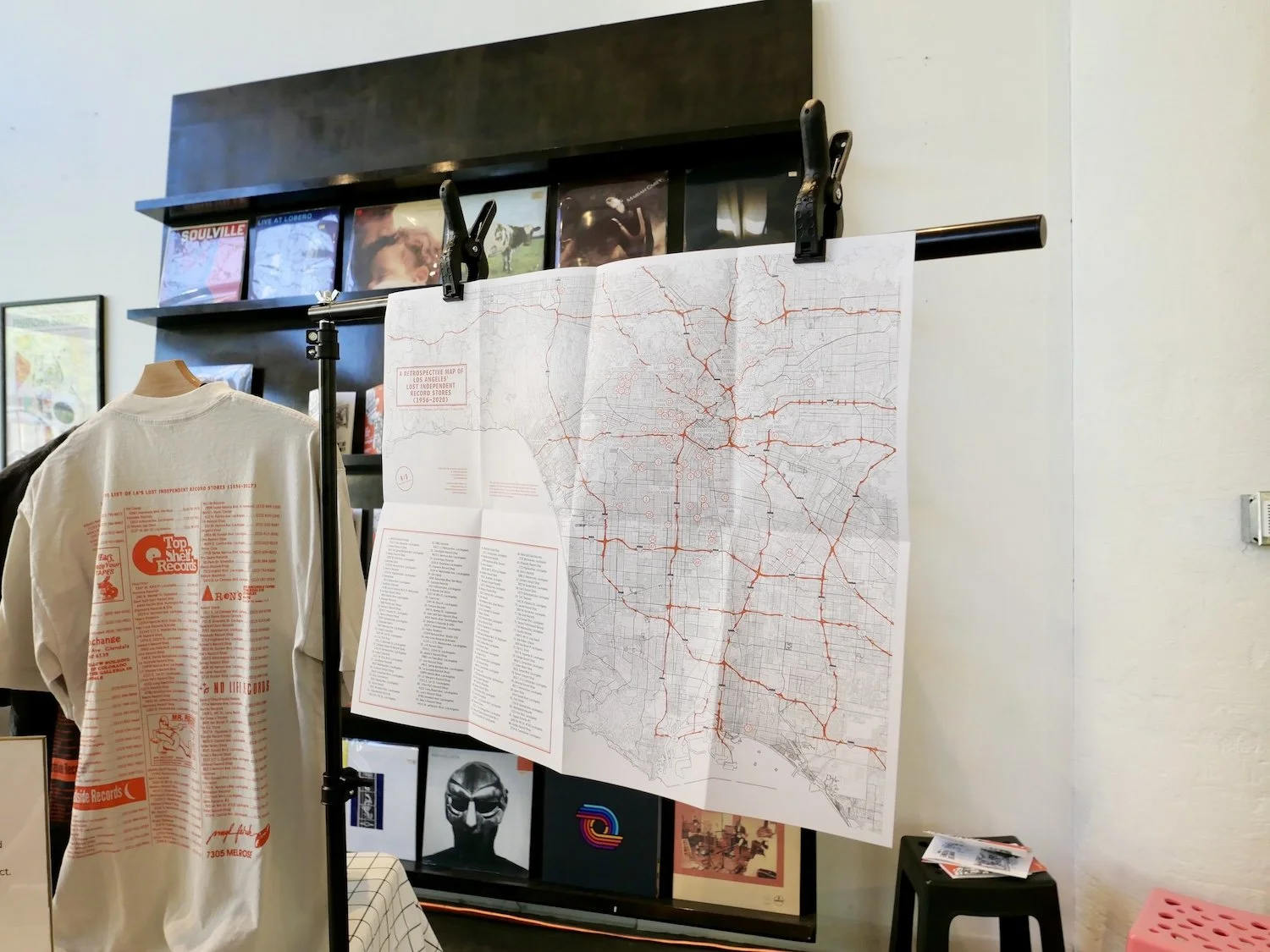
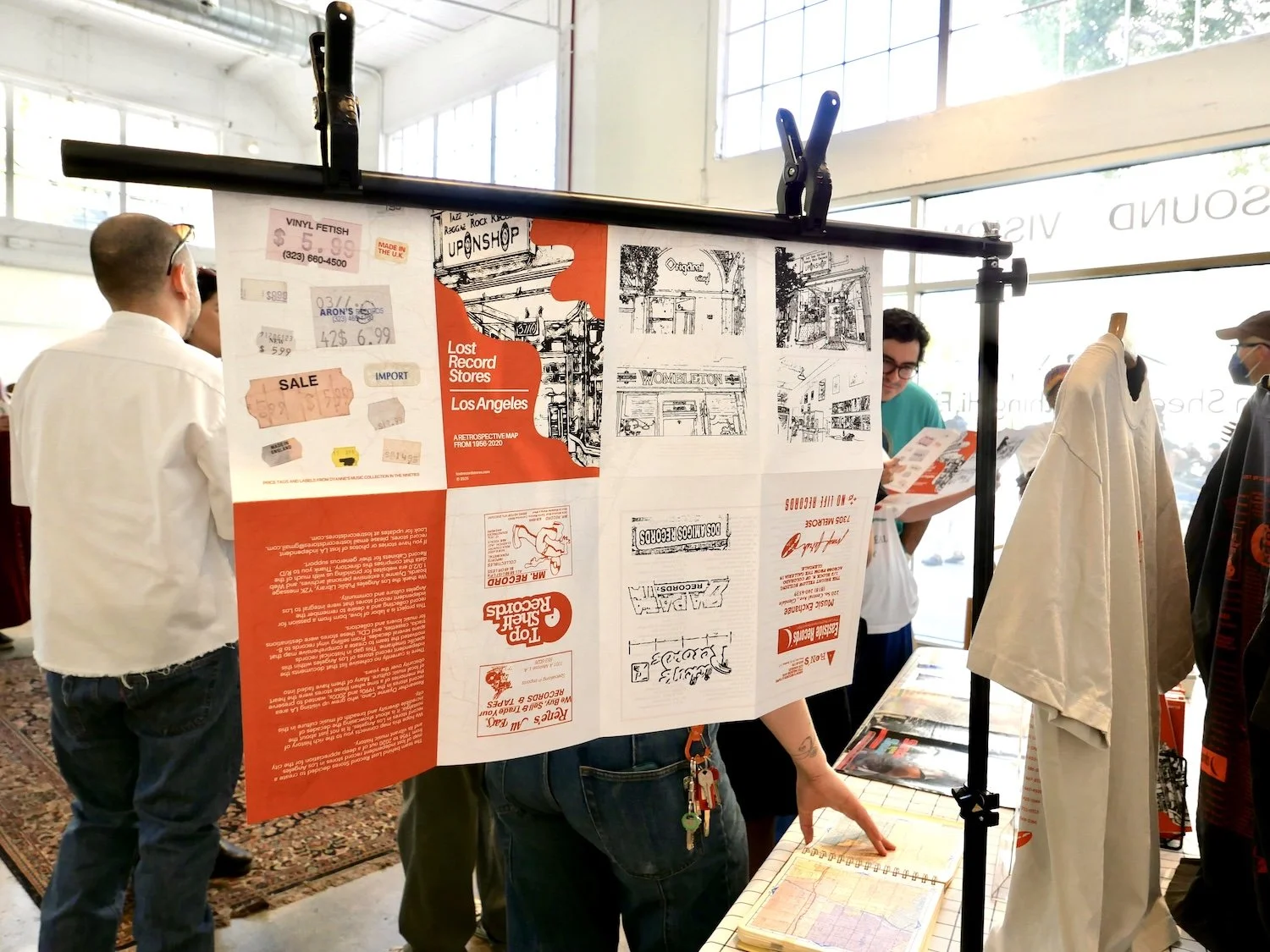

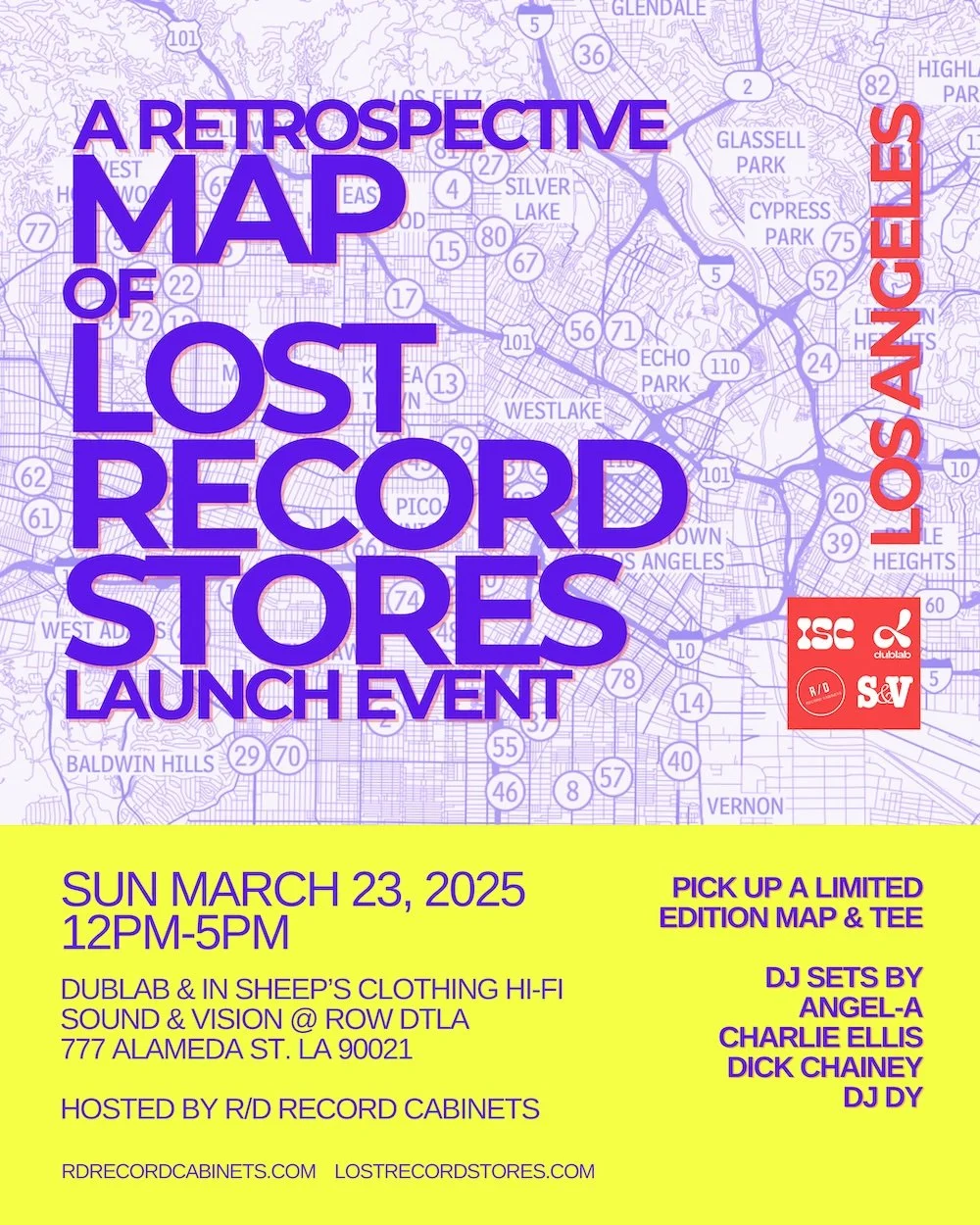

The response to Version 1.0 of LA’s Lost Record Stores (LRS) Map in 2025 was remarkable. I attribute this to nostalgia, the resurgence of physical media as a counterpoint to digital algorithms, and the love for our city that runs deep and wide. I quickly realized that I needed to continue the work: to preserve memory in a tangible way and to commemorate the LA we have lost but have found again.
I grew up in LA, and when I wasn’t at school or at home in the 1990s, I was in record stores with my high school friends, who were all obsessed with music like me. I discovered imported vinyl records and bootlegs at Melrose Avenue record stores. My CD collection grew from my countless trips to Eastside Records in Los Feliz and CD Exchange in Glendale. My college years in the early 2000s were spent at Aron’s Records with my best friend, John. Over the past 25 years I watched as so many of these small independent record shops closed as people shifted to downloading and streaming music.
For Version 2.0, I went back to 1893, when the Tally Brothers ran the first ads in LA for phonographs the general public could buy. Before then, phonograph parlors served as early listening bars, since most people couldn't afford to own a phonograph at home. This reminds us that early on people valued the experience of listening to recorded music together.
The focus this time was to expand the directory to the San Gabriel Valley, South Bay/Long Beach and the San Fernando Valley. Our maps’ focus is on independent record stores: the smaller, locally-owned shops that often lack the name recognition of larger chains. We will gradually add chains, starting with small, local ones. For now, our priority is preserving the memory of record stores that might otherwise be forgotten. Whenever possible, the LRS website includes people's personal stories and memories of these shops.
After the devastating fires in Altadena and Pacific Palisades this past year, documenting the record stores that once stood in these communities became especially important.
Thank you for your curiosity and picking up this map. These histories matter. Most of these shops closed before the internet existed, leaving behind few traces. Their stories have been overlooked, dismissed, or simply lost to time. But these lost record stores deserve better. They were local hubs where subcultures were born, diasporas connected, friendships were made, and entire generations discovered music.
Dyanne Cano
February 15, 2026
LRS Team:
Dyanne Cano | Editor and Researcher
Geoff Sanhueza | Designer
We thank the Los Angeles music community, former employees and customers of these lost record stores, the Los Angeles Public Library, Y2K message boards, Dyanne’s extensive personal archives, Discogs, and Web 1.0/2.0 era websites for providing us with much of the data that comprises this directory. A special thank you to R/D Record Cabinets for their generous support of this community map project. Thank you to Alice Lin for her web design consultations.
This archival map project should not be considered exhaustive; it is a living document based on ongoing research and contributions. We want to expand our list so please send us your memories and photos of record stores we have lost in the Los Angeles area.
Much of our research is based on primary sources like newspapers from the past 130 years. Printed record store ads were limited to shops that could afford them, which meant smaller record stores were frequently absent from these publications. Articles in weeklies, magazines, and newspapers in the Los Angeles area also primarily featured record stores that sold music by artists from the US and Europe, creating a significant gap in representation.
All rights reserved. No part of this publication may be reproduced or transmitted in any form or by any means without prior permission in writing from the publisher.
All efforts have been made to trace copyright holders. Any errors or omissions will be corrected in subsequent editions if notification is given in writing to the publisher. All copyright remains property of the respective owners.
This archive presents historical documentation of record stores for educational, archival, and transformative purposes under Fair Use (17 U.S.C. § 107), preserving cultural memory through commentary, research, and scholarship.
Lost Record Stores acknowledges the Tongva, Tataviam, Serrano, Kizh, and Chumash Peoples as the traditional caretakers of the water and land on which we create, build, operate, and live. We honor and pay respect to their ancestors and their communities today, who continue to nurture this land and water through traditional practices, activism, art and education.
Project sponsored by: